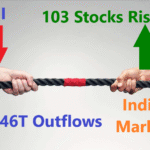

Global markets celebrate while Indian equities struggle, micro-caps tumble, and shareholders desperately seek answers
Global Markets Defy Gravity With Surprising Tenacity
International equity benchmarks have developed an almost amusing ability to bounce back. Following brief, courteous downturns, these indices consistently resume their upward trajectory as though actively demonstrating that pessimism deserves no respect. Market experts issue daily warnings about artificial intelligence valuations reaching dangerous territory, while nervous traders obsess over Japan’s unwinding carry trade positions amid climbing long-term Japanese yields. Despite these concerns, global markets simply adjust their stance and march forward like someone criticized for their appearance yet confidently proceeding to a professional photography session.
Indian equity benchmarks have also recorded fresh peaks, though their underlying sentiment tells a considerably more complicated story. Imagine the high-achieving student who performs excellently but faces criticism because classmates achieved perfect scores. Our markets exhibit this peculiar dynamic despite favorable GDP expansion exceeding projections, inflation metrics performing better than anticipated, robust corporate profit reports, declining crude oil valuations, reduced geopolitical tensions, and preliminary advancement in tariff negotiations between India and the United States. Nevertheless, domestic indices remain strangely muted compared to international counterparts. Blue-chip benchmarks generate news coverage, yet the festivities feel incomplete.
The Divergence Between Large Caps and Smaller Segments
Beneath surface-level optimism, mid-cap indices demonstrate sideways movement without meaningful direction. Small-cap segments—along with their even smaller relatives—aren’t merely underperforming but have declined substantially from previous highs. This situation becomes particularly ironic considering numerous smaller companies reported unexpectedly robust quarterly results accompanied by optimistic management guidance regarding upcoming expansion. Corporate confidence exists abundantly, yet share prices appear to have ignored the positive message entirely.
This disconnect has naturally generated significant anxiety within the retail investment community. Portfolio performance across individual holdings, mutual fund schemes, and portfolio management services consistently underperforms respective benchmarks. This widespread underperformance has unleashed the familiar combination of anxiety, uncertainty, and deep introspection. Every investor confronts the timeless dilemma: “Have my investment decisions failed, or are market conditions temporarily distorted?”
Mr. Market’s Unpredictable Behavior Continues
Mr. Market possesses a well-documented reputation for mischief. His specialty involves elevating expectations precisely high enough before introducing unexpected volatility. He demonstrates equal disinterest in favoring bullish or bearish participants. Instead, his preference involves maintaining uncertainty across both camps. When fundamental economic indicators suggest rallies should materialize, he frequently remains inactive. During periods demanding prudence, he occasionally performs unexpected acrobatics.
Truthfully, legitimate explanations exist for Indian markets’ subdued performance below headline indices. The primary obstacle appears to be continuous excessive share supply overwhelming absorption capacity. Fresh initial public offerings, qualified institutional placements, promoter stake reductions, strategic investor exits—virtually every stakeholder group has enthusiastically embraced selling, with retail participants representing the notable exception. Combine these factors with intermittent foreign institutional investor liquidation and short-term speculative position closures triggered by artificial intelligence correction fears or Japanese yen-related concerns, and demand consistently faces overwhelming fresh supply pressure. Even delicious cuisine becomes unpalatable with excessive seasoning; domestic markets currently experience similar conditions.
Valuation Concerns and Shifting Fund House Strategies
Valuation multiples have extended beyond comfortable ranges across significant market portions. Prices have raced ahead of underlying business fundamentals throughout numerous sectors, compelling even bullish investors to pause and reassess their conviction levels. Recognition of international risk factors has intensified—market participants no longer dismiss possibilities of sudden global risk aversion episodes. Increased awareness naturally breeds increased caution. Unfortunately, this prudence becomes problematic when markets require enthusiastic purchase activity for sustained momentum.
Contributing further to hesitation is an emerging behavioral transformation within the mutual fund industry. Asset management companies—alongside their distribution networks—actively discourage additional capital allocation toward dedicated mid-cap and small-cap investment products. They highlight stretched valuations and caution investors against expecting the seamless, extraordinary returns characteristic of the post-pandemic recovery period. While these advisories stem from genuine concern for investor welfare, they simultaneously reduce incremental demand flowing toward smaller enterprises, intensifying the performance gap between large-cap and broader market segments.
Temporary Phase or Structural Shift?
Certain investors question whether current conditions signal the emergence of a lasting structural pattern or represent merely another episode where markets exhibit teenage-like moodiness—displaying sullenness without apparent justification, only to rebound later with theatrical enthusiasm. Honestly, nobody possesses definitive answers. Markets rarely follow predictable linear paths; they advance through spiral patterns that reveal their underlying rationale exclusively through retrospective analysis.
Currently, market participants must acknowledge that near-term confusion represents an inherent characteristic of equity market participation—either constituting part of the market’s intrinsic appeal or its fundamental frustration, depending upon individual temperament and perspective. The divergence between benchmark performance and portfolio returns tests investor patience. Strong corporate fundamentals clash with weak price action. Global optimism contrasts with domestic hesitation.
Navigating the Current Market Environment
Financial professionals maintaining anonymity suggest several considerations for investors grappling with present market conditions:
- Maintain perspective: Historical market cycles demonstrate that divergences between fundamentals and prices eventually resolve, though timing remains unpredictable
- Evaluate supply dynamics: Monitor upcoming IPO pipelines, promoter selling schedules, and institutional flow patterns for demand-supply insights
- Review portfolio positioning: Assess whether concentrated exposure to specific market segments creates excessive vulnerability to ongoing rotation patterns
- Consider rebalancing opportunities: Divergent performance across market segments may present strategic allocation adjustment possibilities
- Focus on business quality: Companies demonstrating sustainable competitive advantages typically navigate volatile periods more successfully
The disconnect between rising benchmarks and falling portfolio confidence creates psychological challenges. Large-cap strength masks broader market weakness. Positive earnings reports fail to translate into corresponding share price appreciation. International markets celebrate while domestic small-cap investors endure extended corrections.
Market cycles possess characteristic patterns yet unique personalities. Current conditions reflect neither unprecedented crisis nor guaranteed opportunity—simply another chapter in ongoing market evolution requiring patience, discipline, and perspective from participants willing to accept short-term ambiguity as the admission price for long-term equity market participation.